Written Commentary
STOCK INDEX FUTURES
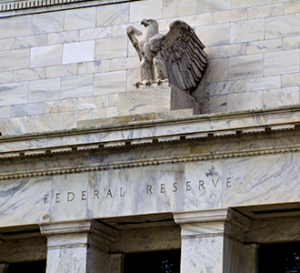
The indexes are broadly lower to start the week. The Trump Administration threatened Fed Chair Powell with a criminal indictment over the weekend, reigniting concerns over central bank independence and triggering a sell-off in American assets. Geopolitical tensions are also in focus after Trump said the US might meet Iranian officials and was in contact with the opposition, as the administration weighed its response to the protests in Iran, including military options. Traders will look forward to Tuesday, which will bring CPI inflation data for December, though the figures are unlikely to change expectations that rates are likely to stay on hold in the coming months.
Tuesday’s figures come after Friday’s December’s nonfarm payrolls report showed the economy added 50,000 new jobs in December, while figures from November’s report were revised down from 64,000 to 56,000. The unemployment rate moved down to 4.4% from the previous reading’s downwardly revised figure of 4.5%. The data was somewhat of a mixed bag and did little to alter the narrative of the “slow-hire, slow-fire” economy, though a drop in the unemployment rate does suggest a stable labor market. Job growth in the economy has largely been concentrated in the healthcare sector, which tends to hire regardless of economic conditions, while other sectors have posted minimal job growth in 2025.
CURRENCY FUTURES
US DOLLAR: The dollar is lower after the Trump Administration threatened Fed Chair Powell with a criminal indictment over the weekend, reigniting concerns over central bank independence. Powell said the Department of Justice had served the Fed with grand jury subpoenas, threatening a criminal indictment related to his testimony before the Senate Banking Committee last June. December’s jobs report slightly pushed back rate cut expectations from the Fed. A rate cut from the Fed is now fully priced in for July, while pricing for June is still favorable as well. December’s report signaled a stable labor market, with employment growth remaining sluggish, while unemployment was little changed, reinforcing the narrative around a ”low-hire, low-fire” economy. Inflation data will be instrumental in deciding Fed policy. Hotter prints could sway opinion at the Fed to hold out longer on cutting rates given that the labor market appears robust despite weaker hiring, which could very well be a result of a drop in labor supply. Fed Chair Powell has suggested that the impact of tariffs on inflation will peak in the first quarter and then subside. Currently, markets are pricing in a 5% chance of a rate cut at the January meeting, with a rate cut not fully priced in until the June meeting.
EURO: The euro is higher against the dollar in what is to be a relatively dry week of data for the eurozone, with Germany’s GDP data on Thursday set to take the spotlight. Recent data showed that German exports unexpectedly fell in November, while industrial output rose despite expectations for a decline. Germany’s exports fell 2.5% month-over-month in November to their lowest level since October 2024. Germany’s total exports rose 0.9% from the same period in 2024. Germany’s industrial output rose 0.8% month on month in November, easing from a revised 2.0% increase in October and beating forecasts of a 0.4% decline. The sustained growth was driven mainly by a sharp rebound in the automotive sector. On the prices front, eurozone inflation figures broadly matched expectations, supporting the view that the ECB is likely to keep policy steady for some time. Headline CPI rose 2.0% year over year in December, while core inflation edged down to 2.3%, slightly below forecasts.
BRITISH POUND: The pound rallied against the dollar to start the week on Monday as concerns over the Fed’s independence heightened following news that the Trump administration threatened Fed Chair Powell with a criminal indictment. The pound has also gained recent support from a reduction in UK fiscal risks following Finance Minister Rachel Reeves’ budget in November. UK GDP data will be released Thursday and is expected to show an improvement in growth amid a potential recovery in manufacturing conditions following the cyberattack on Jaguar Land Rover, which slowed production. Industrial production and the RICS house price survey for December will also be out Thursday, offering a glimpse into demand for homes following the passing of Reeves’ budget. On the political front, Prime Minister Keir Starmer said he would stay the course when recently asked if there were any circumstances in which he could stand down if a poor showing in local elections in May prompts a challenge to his leadership. A possible challenge to leadership could raise concerns about a potential shift to the left, creating renewed unease over fiscal risks. Traders will continue to focus on policy outlooks between the Fed and the Bank of England, as both central banks are expected to lower rates at least once in 2026. The BoE lowered rates by 25 bps last month, although officials at the bank cautioned that the pace of easing could slow as the bank does not want to jump the gun on inflation. Money markets suggest the next rate cut could come in April or June, with the latter meeting being fully priced in for a cut.
JAPANESE YEN: The yen ticked higher in morning trade in what is to be a relatively light week of data for the currency, though attention will be focused on recent export restrictions from China following comments on Taiwan from Prime Minister Takaichi last week. China banned restricted exports to Japan that could potentially have military applications, though the ban is likely just more noise than substance. On Sunday, the coalition partner of Takaichi’s party said she might hold a snap election in February in a bid to capitalize on her strong public approval ratings since taking office in October. Takaichi’s policies, which favor big spending and a dovish Bank of Japan stance, have recently weighed on the Japanese currency. Markets are favorable for a July rate hike from the Bank of Japan, though wage negotiations and updated forecasts on the economy do present opportunities for odds to shift earlier in the year. Governor Kazuo Ueda has said the BOJ would continue to raise borrowing costs if economic and price developments move in line with its forecasts.
AUSTRALIAN DOLLAR: The Aussie is higher against the dollar as foreign currencies get a boost, while the dollar lagged following recent developments between the Fed and Trump administration. Price direction in the Aussie this week will be shaped by consumer-related data. Figures on job advertisements and job vacancies for November will be closely scrutinized for any signs of emerging weakness in the labor market. A concern for the Reserve Bank of Australia remains persistently high inflation. The release of the November household spending indicator later in the week will also draw close attention, amid growing evidence of a broad-based economic recovery partly driven by consumer demand. If household spending shows a sharp pre-Christmas increase, the RBA might be more inclined to begin raising rates sooner than expected. Market odds are favorable to a rate hike in May, with an increase in rates not fully priced in until August. Data out last week showed that consumer prices rose 3.4% on the year in November, below forecasts for 3.6% and a drop from October’s reading of 3.8%. Trimmed mean CPI, which is a key measure of core inflation for the Reserve Bank of Australia, rose 0.3% in November and 3.2% for the year, staying well above the target 2%. Capacity utilization, housing demand, facets from GDP data, and other indicators have all recently posted hotter-than-expected readings. Still, the central bank sees the monthly inflation figures as volatile and places greater emphasis on its quarterly inflation report, which is due in late January.
INTEREST RATE MARKET FUTURES
Yields are higher across the curve as a sell-off in American assets takes place following news that the Trump administration threatened Fed Chair Powell with criminal prosecution over the Fed’s recent renovations. The bank released a video Sunday night, with Chair Powell accusing the administration of using the threat of criminal prosecution to pressure the central bank into lowering rates. Powell framed the move from the Justice Department as a head-on challenge to the central bank’s independence. Powell made clear by releasing the video that the situation would be well in the public spotlight. A criminal investigation of a sitting chair is without precedent.
December’s labor report saw the yield curve flatten, with both the 2/10 and 2/30 year spreads narrowing from recent highs. Most categories in the report saw little changes and reinforced the narrative of a cooling but stable labor market. Policymakers at the Fed are likely to question what level of hiring is required to maintain a stable unemployment rate, given that December’s unemployment figure edged back down to 4.4%. Unemployment by demographic group showed little to no change, signaling no signs of stress emerging unevenly. Some groups are more likely to feel unemployment first, which can often serve as a leading indicator on labor market weakness.
Inflation data out tomorrow is not expected to drastically reshape any near-term interest rate moves. Fed Chair Powell suggested that the impact of tariffs on inflation is likely to peak in the first quarter of this year and then subside. November’s report showed that annual inflation dropped to 2.7%, though the figures were likely distorted by collection efforts affected by the government shutdown. The Treasury will auction $58 billion in three-year and $39 billion in 10-year notes on Monday and $22 billion in 30-year bonds on Tuesday.
The spread between the two- and 10-year yields is 65.10 bps, while the two-year yield, which reflects short-term interest rate expectations, is 3.536%.
Interested in more futures markets? Explore our Market Dashboards here.
