Written Commentary
STOCK INDEX FUTURES
The indexes are lower ahead of today’s policy decision out of the Fed, which will come at 1:00 p.m. CST. Corporate earnings are beginning to roll through again; Oracle will report today as investors increasingly look to tech companies to validate AI optimism and high evaluations. The JOLTS report yesterday for October and September showed that openings increased by 12,000 to 7.670 million in October, up from 7.658 million in September. The September figure showed a 431,000 jump from August’s 7.227 million, with both months surpassing expectations of 7.2 million, signaling a labor market that has held up well despite the government shutdown and impact of tariffs. In a sign that there is some strain on the labor market, the number of job quits in the US fell by 187,000 to 2.941 million in October 2025, from 3.128 million in September and below 3.217 million a year ago. It was the lowest level since August 2020, suggesting that workers are choosing to stay in current positions as uncertainty over hiring has weighed on mobility.
The Supreme Court’s ruling on tariffs is expected to come soon, and President Trump reiterated on Tuesday that the effects of appealing the tariffs could be disastrous for the economy, signaling that he could be expecting an unfavorable ruling towards his trade policies. Trump did suggest that the tariffs could stay but would require a longer implementation process, while calling the ruling the greatest threat to national security in history. In a social media post on Sunday, Trump argued that his method of instituting tariffs is far less cumbersome than other methods, suggesting that if the court knocks down his tariffs, there are still feasible ways to implement them.
CURRENCY FUTURES
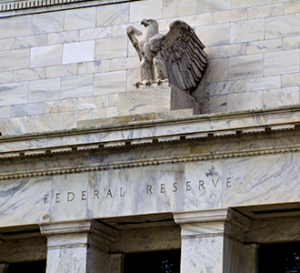
US DOLLAR: The USD index is lower as investors shored up positions ahead of today’s policy decision, where the Fed is expected to deliver a hawkish rate cut. The meeting will likely bring one of the most divided boards in years, with two almost evenly split camps between those who want to stay put on policy and advocates for easing. Fed Funds futures are still implying around a 90% chance of a rate cut. JOLTS data out yesterday showed that job openings increased in the US, while the level of layoffs remained little changed despite recent private data that has reported a higher level of layoffs. Attention at the Fed meeting will center around the release of its summary of economic projections, where markets will be able to better understand officials’ views of how monetary policy should proceed in 2026 as the outlook remains uncertain.
EURO: The euro is higher ahead of the Fed’s meeting today. Strong economic data and recent comments from European Central Bank board member Isabel Schnabel have been supportive of the currency in recent days. Schabel said that the next move out of the central bank may be a rate hike rather than a rate cut, contrary to what most have expected. ECB President Christine Lagarde said on Wednesday the ECB might lift its growth projections again in December given the economy’s unexpected resilience to uncertainty and trade tensions. However, given the current economic landscape of the eurozone, policy moves from the ECB are not expected to happen anytime soon, and 2026 could very well see no action from the central bank. The euro will react to moves in the dollar today following the Fed’s interest rate decision and outlook projections, which have a strong possibility of favoring the dollar. Looking ahead on the data front, final CPI data for November from Germany, France, and Spain on Friday will round out the week.
BRITISH POUND: The pound is higher against the dollar as markets await the Fed’s policy decision and look for any clues about the amount of easing the central bank could deliver in 2026. Over in the UK, Bank of England policy members struck opposing tones on their opinions over the outlook for interest rates, highlighting a divide on the Monetary Policy Committee ahead of its policy meeting next week. Clare Lombardelli, deputy governor for monetary policy, said she worried more about upside risks to inflation and also said the BoE might be nearing the end of its interest rate cutting cycle. Dave Ramsden, deputy governor for markets and banking, who sought a rate cut in November, said he saw no evidence that inflation was not going to fall as the BoE expects. Markets are pricing roughly an 88% chance that the BoE will lower rates next week, with a second rate cut priced in by June. Subdued wage growth is likely to put a damper on spending and weigh on inflation, as Governor Andrew Bailey has said recently, although markets should continue to monitor upcoming economic data for indicators on inflation direction. The new budget in the UK is expected to knock around 0.4 to 0.5 percentage points off the annual inflation rate in the second half of 2026. Looking ahead, GDP data out Friday for October will be closely watched, with forecasts expecting growth of 0.1%. Also out on Friday will be the RICS house price survey, industrial production, and trade figures.
JAPANESE YEN: The yen is higher after falling close to the 157 level on Tuesday, as fiscal policy and inflation concerns have weighed on the currency. Early on Wednesday, Japanese Prime Minister Sanae Takaichi said that it was important for currencies to reflect fundamentals and that the government remained prepared to take appropriate action against “excessive and disorderly moves” if necessary. Yields on JGBs have recently risen on a mix of market anxiety over fiscal spending, heightened inflation expectations, and expectations that the Bank of Japan will raise rates in December. The rise in yields has alarmed some investors due to its potential effect on the yen carry trade. Governor Kazuo Ueda on Tuesday said that the BoJ could ramp up its plans to purchase government bonds if yields continue to rise sharply, noting that recent moves in rates have been somewhat rapid. Q3 GDP was recently revised to a 2.3% annualized contraction, but the drop in growth is likely to be reversed in Q4. For the Bank of Japan, the figures will likely have little impact on their interest rate decision next week, a meeting where markets have increasingly expected them to raise interest rates. Strong prospects for next year’s spring wage talks have been driving rate hike expectations, as BoJ Governor Ueda has said that the negotiations will be instrumental in deciding on the timing of a rate hike.
AUSTRALIAN DOLLAR: The Aussie is little changed against the dollar despite a rise in local bond yields after the Reserve Bank of Australia kept rates on hold yesterday and signaled that the next move out of the central bank is likely to be upwards. Increased risks to inflation have presented themselves in the economy, requiring the RBA to need more time to assess the persistence of the inflationary pressures. Household spending, monthly inflation, and private demand figures have all posted strong readings recently and are likely to stay elevated. Data from the National Australia Bank earlier in the day showed that capacity utilization across the economy was at its highest level in 18 months, which will add to the RBA’s level of concern about the inflation outlook. Employment data for November on Thursday will cap the week; if inflation falls from the current 4.3%, expect a round of calls for rate hikes in the first half of 2026.
INTEREST RATE MARKET FUTURES
Yields edged higher across the curve ahead of today’s Fed meeting. The Fed is set to lower rates by 25 bps per widely held market expectations, but the outlook for 2026 will determine price action in the bonds. The Fed will update its Summary of Economic Projections, which includes interest rate projections from each FOMC member, offering better insights into the opinions of how members at the Fed think monetary policy should play out. The Fed meeting is expected to be one of the most divided in recent memory, as several officials have recently called for caution in easing rates too quickly, given that inflation still rests well above the Fed’s 2% target and that the labor market is not collapsing. Other officials have been vocal about getting ahead of any weakness in the labor market, justifying the case for lower monetary policy.
The dynamics of the economy on a surface level appear to be mixed, and the absence of government data due to the shutdown only made the picture on the economy foggier. However, when looking through recent figures, it seems hard to justify grounds for a rate cut when inflation is at 3.0%, while the labor market is stable and not collapsing as many think. News of layoffs has been a central talking point in the economy recently, and Challenger, Gray, & Christmas’s layoff report in October (153,074) and November (71,321) certainly indicates that a large number of people have lost their job. However, it is important to understand that those numbers are announced layoffs, which will happen in the future. Some of those layoffs are attributed to when employees quit and the job is not filled (attrition), and the report also does not mean that companies will follow through on their initial announcement. The JOLTS report, which measures job openings, new hires, employee quits or layoffs, and other turnover, paints a much different story regarding actual layoffs that took place during those months vs. Challenger’s figures. October layoffs, which are labeled as separations in the report, were not elevated compared to previous readings and were below pre-pandemic trends.
On Thursday, the Treasury will auction $22 billion in 30-year bonds. The spread between the two- and 10-year yields is little changed at 57.50 bps, while the two-year yield, which reflects short-term interest rate expectations, inched up to 3.615%.
Interested in more futures markets? Explore our Market Dashboards here.
