Written Commentary
MACRO FRAME
The renewed geopolitical risk backdrop adds another layer of uncertainty heading into Friday’s jobs report, with markets watching whether labor data alters expectations for the Federal Reserve’s policy path.
TREASURY FUTURES
Treasury yields moved higher across the curve as the conflict in Iran continues to trigger inflation concerns among investors. Rising energy prices could keep inflation elevated and delay Federal Reserve easing, while the conflict clouds the monetary policy outlook. Strong ISM readings, both for manufacturing and services, have offered upward support to yields. The manufacturing prices-paid index climbed to a more than three-year high, while services sector activity grew at its fastest pace in three years.
Markets have trimmed near-term easing expectations. The probability of a June rate cut continues to drop, now at 31%. Markets are no longer fully priced for a cut in September, though odds are favorable. Meanwhile, total easing for year-end has narrowed to about 37 bps, down from 46 on Wednesday and 53 bps last week, meaning two cuts are no longer fully priced for 2026. Friday’s jobs report will provide further clarity on whether labor-market resilience continues to justify a patient Fed stance.
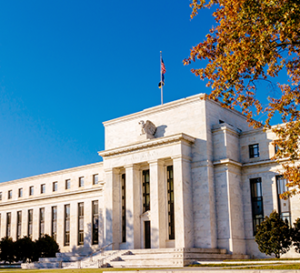
Watch point: With labor data pointing to continued stability and inflation remaining sticky, even as the year-over-year pace eased slightly, a late summer rate cut still remains the base case.
The spread between the two- and 10-year yields is 54.90 bps, while the two-year yield, which reflects short-term interest rate expectations, is 3.589%.
STOCK INDEX FUTURES
Equity indexes are lower as the conflict in Iran continues to weigh on sentiment, while markets await Friday’s nonfarm payroll figures for February. The ISM Services PMI rose to 56.1 in February from 53.8 in January, beating expectations of 53.5 and marking the fastest pace of expansion in the sector since August 2022. The strength was driven by a sharp increase in business activity, with the activity index climbing to 59.9 from 57.4, its highest reading since September 2024.
New orders recorded their strongest rise in 17 months, while employment growth accelerated to its fastest pace in a year, suggesting firms are responding to improving demand conditions. The supplier deliveries index remained above 50 for a 15th consecutive month, indicating continued supply constraints amid firm demand.
The services data follows a strong manufacturing print that also revealed the sector was grappling with elevated price pressures. Manufacturing PMI was 52.4, above forecasts and marking a second consecutive month of expansion, while the prices-paid index surged to 70.5 from 59, its highest level since June 2022.
Fundamentally, the earnings backdrop remains supportive. S&P 500 fourth-quarter earnings are tracking near 14% year-over-year growth, driven largely by the Magnificent Seven (excluding Tesla) and strong technology and semiconductor results following NVIDIA’s outsized performance. Forward earnings estimates have edged higher since January, and with Industrials and other cyclical sectors also delivering solid growth, corporate fundamentals continue to provide resilience despite ongoing AI-related uncertainty and geopolitical volatility.
Tariff-related uncertainty continues to amplify volatility following February’s Supreme Court ruling, adding another layer of policy risk to an already fragile sentiment backdrop.
Watch point: With existing trade deals in limbo and recent data supporting a pause from the Fed, focus will center around Iran and Friday’s labor report for macro direction.
CURRENCY FUTURES
US DOLLAR: The USD Index rose 0.16% to 99.22 as demand for dollar liquidity remained firm amid the conflict in Iran. Earlier hopes of de-escalation faded after Iran warned that Washington would “bitterly regret” the sinking of an Iranian warship off Sri Lanka, reviving geopolitical uncertainty.
The dollar continues to benefit from safe-haven flows, while currencies more exposed to potential energy supply disruptions have come under pressure. As both a major oil producer and issuer of the world’s reserve currency, the US remains a natural destination for defensive capital, leaving dollar liquidity in strong demand.
Near-term price action is likely to remain headline-driven ahead of Friday’s labor report, where payrolls are expected to rise by roughly 58,000 in February. Any signs of de-escalation could weigh on the dollar as safe-haven demand fades, while continued fighting and tighter energy markets would likely reinforce dollar strength through higher inflation expectations.
From a macro perspective, resilient domestic demand and persistent services inflation continue to provide modest underlying support for the currency, and Friday’s labor data is not expected to materially shift expectations for Federal Reserve policy.
Watch point: Dollar direction is likely to remain driven by geopolitical headlines and energy markets in the near term.
EURO: The euro fell 0.22% to $1.1606 after a brief recovery on Wednesday as calmer market conditions and stronger risk sentiment provided only temporary support. Recent eurozone data has otherwise been constructive for the currency and has prompted some discussion that the next move from the European Central Bank could ultimately be a rate hike rather than further easing.
Labor market conditions remain firm, with the eurozone unemployment rate falling to a record low of 6.1% in January. Inflation data has also surprised to the upside, with headline inflation rising to 1.9% year-over-year and core inflation reaching 2.4%, both above forecasts.
European Central Bank President Christine Lagarde reiterated last week that inflation is expected to approach the 2% target over the medium term, though geopolitical tensions continue to cloud the outlook. For now, money markets still price no policy change from the ECB through 2026.
Watch point: Continued upside surprises in eurozone inflation or further tightening in labor markets could revive speculation about future ECB tightening, though euro direction will likely remain sensitive to global risk sentiment and dollar dynamics.
BRITISH POUND: Sterling fell 0.20% to $1.3346 as attention remained focused on the US–Israeli conflict with Iran, which has supported demand for the dollar. The rise in global energy prices has also shifted expectations for Bank of England policy, with traders now pricing roughly a 22% probability of a rate cut this month, down sharply from 75% last week. Markets still expect the BoE to begin easing by July. The UK remains particularly sensitive to energy-driven inflation given its reliance on oil and gas imports.
Domestic factors have also weighed on the currency. Data last month showed sluggish economic growth in the final quarter of 2025, while political pressures increased after Prime Minister Keir Starmer’s Labour Party lost a local election in Manchester.
Finance Minister Rachel Reeves’ budget update on Tuesday reinforced the modest growth outlook, with the economy projected to expand 1.1% this year. However, the budget did include lower borrowing costs, which markets viewed as a modest positive.
Watch point: A March rate cut is now in question with renewed geopolitical risks and a potential sustained rise in energy prices. We look for GBP/USD to weaken over 1H 2026.
JAPANESE YEN: The yen fell 0.45% to 157.73 as another rise in energy prices highlighted Japan’s vulnerability as a major energy importer. Safe-haven flows have continued to favor the USD. Bank of Japan Governor Kazuo Ueda warned that the Middle East conflict could significantly affect Japan’s economy, signaling the central bank is likely to keep rates steady for an extended period. Finance Minister Satsuki Katayama said authorities are monitoring markets with an “extremely strong sense of urgency” and reiterated that Japan maintains an understanding with the US regarding currency stability, keeping intervention risk in focus. Meanwhile, Bank of Japan Deputy Governor Ryozo Himino reaffirmed that the central bank will continue raising rates, though without committing to a timeline.
Watch point: A move beyond the ¥160 range would likely intensify intervention rhetoric, while sustained energy-driven inflation could keep tightening expectations intact despite political pressure.
AUSTRALIAN DOLLAR: The Aussie fell 0.64% to $0.7028 as the conflict in Iran continues to favor the USD. However, the Aussie has found support from stronger-than-expected growth data, which has supported a tightening bias from the Reserve Bank of Australia. Australia’s economy expanded 0.8% in Q4 2025, lifting annual growth to 2.6%, the fastest pace since 2023. Markets currently imply around a 25% probability of a rate hike at the March meeting, while a quarter-point increase is fully priced for May and again in November.
RBA Governor Michele Bullock said the March meeting would be “live” for a potential rate increase, marking a shift from her recent patient tone. She warned that an oil price shock linked to Middle East tensions could reignite domestic inflation pressures, underscoring the sensitivity of the outlook to global developments.
Watch point: Wage figures, capacity utilization, PMI readings, and other signals on economic momentum will dictate market sentiment over future timing expectations.
Interested in more futures markets? Explore our Market Dashboards here.
