ADMIS News
COCOA
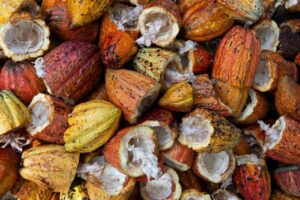
December Cocoa was higher early Thursday but had not taken out Wednesday’s four-week high despite strong grind data from Europe and Asia. Europe’s third-quarter cocoa grind came in at 348,215 metric tons, up 3.2% from a year earlier and the first increase from year ago levels since the second quarter of 2024. Year to date grind (quarters 1-3) has reached 990,000 tons, which is down from 1.023 million at this point last year and is the lowest since 2015. European grind has been trending lower over the past decade due to the expansion of processing in Ivory Coast. Germany’s third quarter cocoa grind was up 3.6% on the year at 98,274 metric tons. Asia’s third-quarter grind came in at 233,767 tons, up 29.2% from, a year ago. This was the second quarter in a row that grind increased more than 25% from year ago levels, and it was the highest for any quarter on record going back to at least 2012. Year to date grind has reached 681,900 tons, which is up from 573,000 at this point last year, which beats the previous high of 673,000 in 2022 and is the highest going back to at least 2012. On Wednesday, Malaysian cocoa third-quarter grindings data showed an increase of 47% year-on-year, and this was viewed as an indication of strong numbers across Asia. Going into the report, market watchers polled by Bloomberg pointed to lower cocoa grindings in Europe and little change in North America. Also reported on Wednesday, Bloomberg reported that Ivory Coast exporter group Gepex processed 157,446 tons of cocoa during the third quarter, which was a 40.3% gain from 112,242 the same period last year.
COTTON
December Cotton was lower early Thursday after it failed to capitalize on a rally early Wednesday. The market peaked on Wednesday after a stronger-than-expected CPI number lifted the dollar, as that was viewed as negative to cotton on the idea it make US exports less competitive on the global market. The dollar gapped lower early Thursday and well off the Wednesday high, but so far has done little to support cotton. At its peak on Wednesday the nearby Dollar Index had it reached its highest level since April 2025, and the decline overnight hints at exhaustion. This week’s crop progress report showed a modest improvement from last week but still below average, and 31% of the US cotton crop had been harvested versus a five-year average of 29%. World Weather Inc. said western Texas and southwestern Oklahoma will see a wetter weather pattern over the next two weeks that will slow harvesting and perhaps reduce production due to boll rot and stringing out of fibers during periods of heavy rain. Quality was compromised in the southeastern states, Arizona and southern California recently by rain, but the region will be dry for the next ten days to two weeks inducing some improvement. USDA said during El Nino years, high temperatures and reduced soil moisture can compromise cotton crop yields in Brazil and that double-cropping following the soybean harvest could be vulnerable if irregular rainfall delays soybean plantings and harvest and closes the cotton planting window.
SUGAR
March Sugar was lower early Friday after making a new contract high on Wednesday. The market may be overbought technically, and the large net long held by the funds may make the bulls nervous, but the overall supply/demand setup indicates tightening supplies this year without much chance for a reprieve. Sugar prices in India have reportedly increased more than 10% in the past six days on increased demand ahead of the Diwali festival season. Brazilian sugar production is expected to continue to lag year ago levels due to too much rain. However, World Weather Inc. did say southern Brazil will experience a welcome and much-needed break from frequent rain starting today and lasting into next Wednesday, and perhaps this affect some sugar areas, which mainly fall in the center-south region. Rain is expect to resume in these areas in the second half of next week.
COFFEE
December Coffee was lower early Thursday after reaching its highest level since October 8 on Wednesday. Once again, the market pushed above the 50-day moving average but failed to hold that level. The Brazilian real fell to its lowest level since breaking out to its highest level since May on October 5. A strong real can discourage Brazilian producers from selling for export, and the modest decline in the real may have put some pressure on coffee prices. USDA said El Nino will likely adversely affect Brazil coffee production, which will be “exponentially impacted” by how irregular rainfall is during critical points during the production cycle, namely flowering and cherry setting. ICE certified arabica stocks were down 4,909 on Wednesday to 241,947, their lowest since September 16. Vietnam’s new coffee crop year began in October, but traders said fresh supplies are not expected to reach the market in significant volumes until next month.
Interested in more futures markets? Explore our Market Dashboards here.
